Why choose Chile?
Chile is a beautiful country located in the southwest coast of
South America. It is 2,800 miles long, from the arid frontier with
Perú and Bolivia until the frozen Antarctica. It is about
125 miles wide, moving from the Pacific Ocean to the Andes (natural
border with Argentina). It is also an insular country with two widely
known islands: Juan Fernández and Isla de Pascua (Easter
Island).
Chile is known for its wines, skiing, beaches, cooper production
and for being the only country that reunites all the geographical
features that are present in the world.
And its people! Very kind and always willing to help you in everything
you need.
Santiago
 |
 |
 |
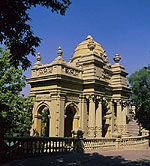
| Cerro Santa Lucia |
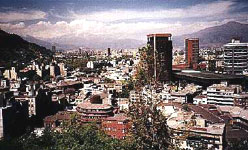
Santiago |
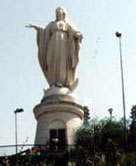
San Cristobal hill |
The capital of Chile. Santiago is beautifully set in a wide plain
crossed by the Mapocho river. With the Andes as a backdrop and two
nice and lonely hills down town, offers the comfort, cultural, sport
and out-door activities of a big city.
It has plenty of public gardens including Plaza de la Constitución
where La Moneda, the national building, is settled on. [
More about Santiago... ]
Vina del Mar
 |
 |
 |
 |
| |
Festival de Vina del Mar |
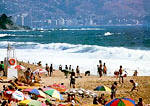
The beach |
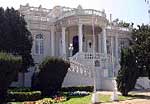
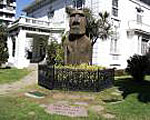
Fonck museum with the only muai
ourside of easter island |
This city, also known as ‘the Garden City’ was founded
on December 29th, 1874, by the engineer Jose Francisco Vergara Echevers,
and has grown into Chile's most luxurious beach resort town, attracting
visitors from all over the world.
Some come for Vina Del Mar 's languid tropical atmosphere, its grand
tree lined , its vast, soft stretches of white sand beach, and its
sybaritic abundance of gourmet restaurants.
While Vina's celebrity has brought it any number of sleek, modern
buildings and hotels , the character of the town is set by its many
charming colonial houses.
Perhaps the most romantic way to tour Vina Del Mar 's tranquil streets
is via the Victoria, the region's traditional horse-drawn carriage.
Vina is famous for the Musical Festival of Vina del Mar, which is
held every year in the third week of February and lasts for five
days. It is very popular amongst nationals and effectively marks
the end of the summer season.
The city is also home to one of the most renowned gambling casinos
you´ll find in the country.
Valparaíso
 |
 |
 |
 |
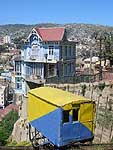
| Furnicular Artill. |
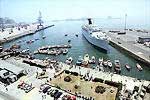
The Harbour |
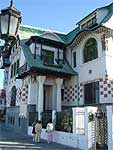
Palacio_Baburizza |
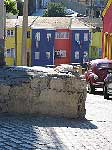
Valparaiso's typical houses |
Valparaiso's bay was first populated by Changos, an ethnic group
dedicated to fishing and gathering. Spanish explorers arrived in
1536, on the (Santiaguillo), a ship sent by Diego de Almagro, considered
the first European explorer of Chile.
Valparaiso (or simply Valpo) became the main harbor for the nascent
Chilean navy, and opened to international trade, which had been
limited to commerce with Spain and its other colonies. Valparaiso
soon became a required stopover for ships crossing between the Atlantic
and Pacific oceans via the Strait of Magellan and Cape Horn, and
gained particular importance supporting and supplying the California
Gold Rush (1848-1858). In its role as a major seaport, Valparaiso
received immigrants from many countries, mainly from England, Germany
and Italy. German, French, Italian and English were commonly spoken
among its citizens, who also had newspapers in these same languages. [
More about Valparaiso ]
|

 +56 9 9257 1436
  +56 9 9257 1436
  info@natalislang.com
  www.Natalislang.com